Maxus T60 review
Going into our Maxus T60 test, we didn't expect to be surprised. But we were.
We've had the T60 MAX for more than a quick test drive. We've lived with it for a bit, to see what it's like day to day and who it'll make sense for.
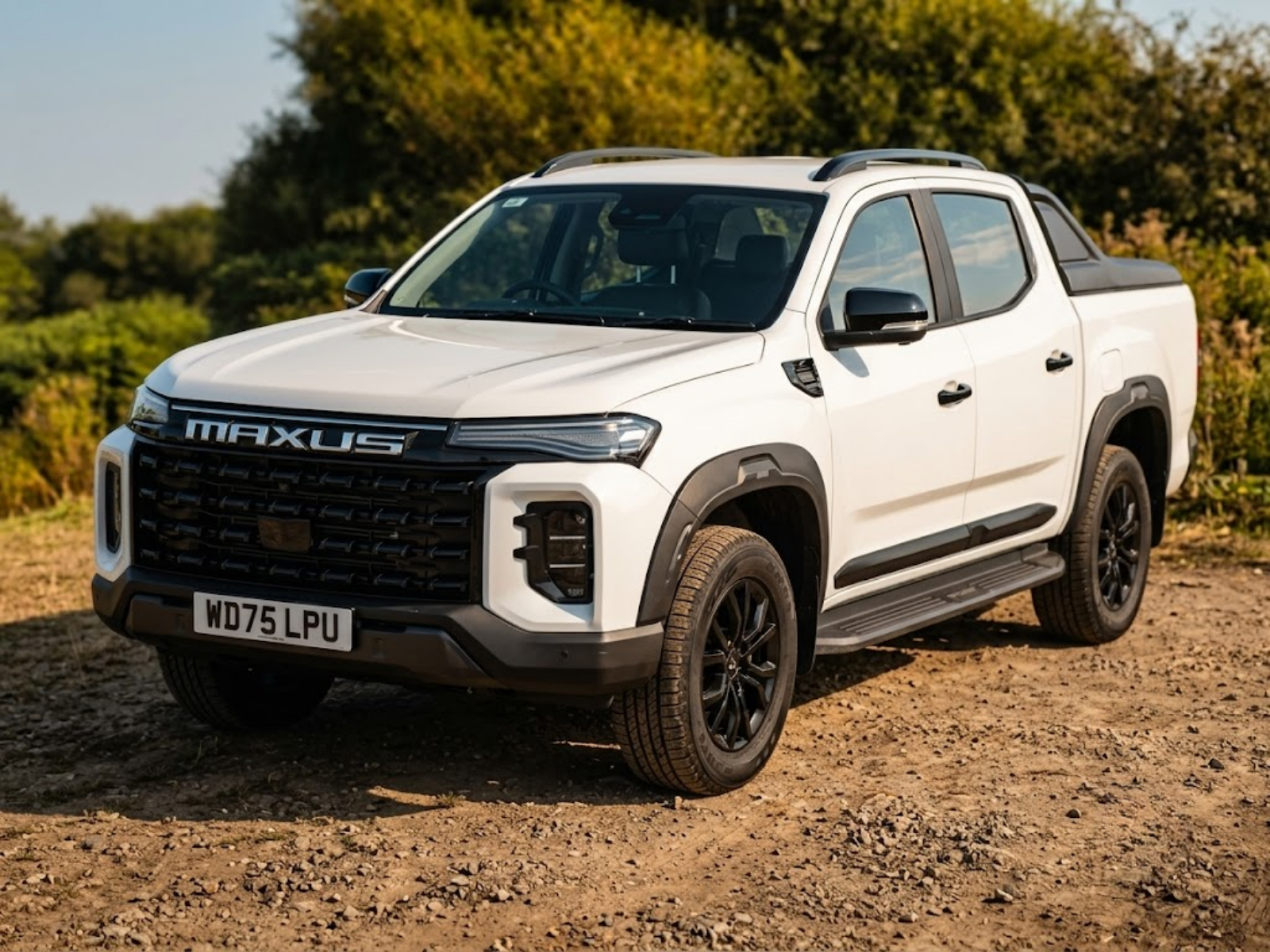
Size and presence
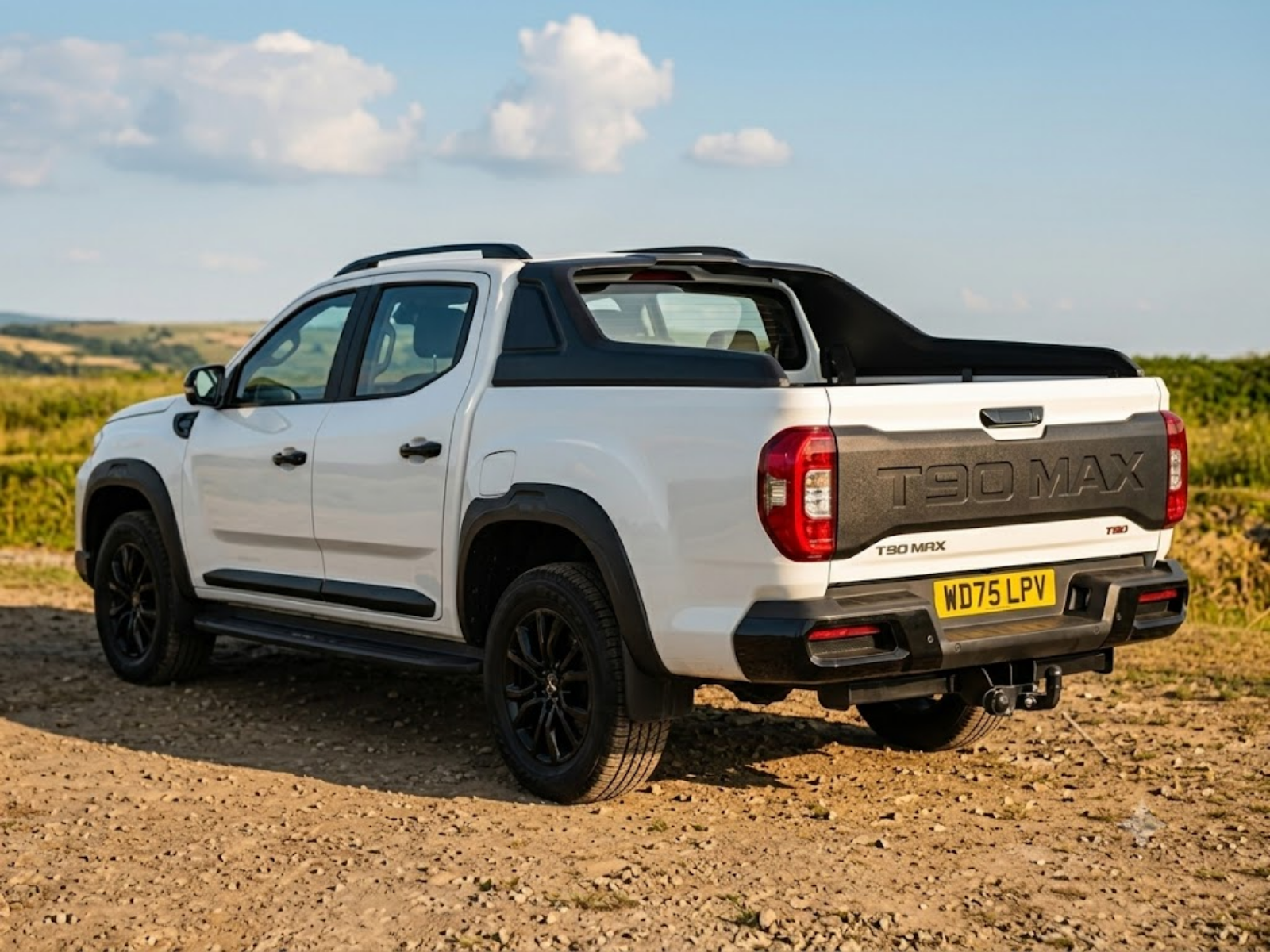
It's a big truck and you know it the moment you walk up to it. Tall, square-shouldered, and it sits high enough to fill the mirror of most things in front of you. That presence is handy on the road, and it tends to buy you a bit of space in traffic. The flip side is the length. In a multi-storey or down a narrow street you're aware of every inch of it, and the load bed is on the small side for this class, so if you're carrying bulky loads all day it's worth bearing in mind.
Even so, it's easy to drive. The steering is light, lighter than something this heavy has any right to be, so getting it down a tight lane or reversing into an awkward space is far less of a faff than the size suggests. Visibility is good, the mirrors are big and clear, and there's a reversing camera and sensors to sort out the rest. Coming from a smaller van it feels enormous for the first hour, and then you just stop thinking about it.
Inside the cab
The cabin is the best part of the truck. It feels far more car than commercial, and the materials are better than the price would have you expect, soft where your arms sit and put together properly. The dashboard's well laid out and looks a good deal dearer than it is. It's not up to Ford Ranger quality, and we're not going to pretend it is, but for the money it does everything it can, and it's miles ahead of what Maxus was turning out a few years back.
There's plenty of room in here too. Up front you get a wide centre console, somewhere sensible for your phone, and enough storage to swallow a week's worth of clutter. The back is genuinely roomy. It's a real five-seat crew cab, with enough space for all passengers. We know trucks are often used as family vehicles too, so you won't be compromising on space.
Two 12.3-inch screens run the dashboard, one for the dials and one for everything else, and both look the part. You get Apple CarPlay and Android Auto, wireless charging, and a reversing camera that shows you exactly what's behind you. The seats are leather, heated and electrically adjusted, and there's a heated steering wheel for cold mornings. You may pay extra for this with other manufacturers, but Maxus have been generous with it as standard.
The driving position sits you up high, higher than most, which suited us fine. Shorter drivers will get on with it easily. There's no lumbar adjustment though, so taller drivers, or anyone who likes to get their support just right on a long run, might want a bit more from the seat.
One last thing worth flagging: the indicators. The self-cancel has a mind of its own, dropping the signal early sometimes and leaving it ticking away long after the corner at others. It's a niggle rather than a fault, but it's the kind of thing you'd rather hear about now than find out on a test drive.
The numbers
We checked the headline figures rather than take them on trust, and they stack up well for a truck at this price. The 3,500kg towing matches the established names, and a payload over a tonne keeps it firmly in commercial-vehicle territory.
| Specification | Maxus T60 MAX |
|---|---|
| Engine | 2.0-litre twin-turbo diesel |
| Power and torque | 213 bhp (215 PS) / 500 Nm |
| Transmission | 8-speed ZF automatic, selectable 4WD |
| Towing capacity | 3,500 kg braked |
| Gross vehicle weight | 3,250 kg |
| Payload | 1,050 kg |
| Warranty | 5 years / 100,000 miles |
| Price | From £28,995 plus VAT (single, fully-loaded Double Cab) |
On the road
Our first impression was that it might feel a bit flat, but that soon passed. We wouldn't call the 2.0-litre twin-turbo diesel powerful, but it's more than ample, pulling cleanly and keeping up with fast traffic without any drama. On paper it's actually got the edge on its most obvious rival, with 215 PS against the equivalent 2.0-litre Ford Ranger's 205 PS, on the same 500Nm of torque. The eight-speed ZF automatic is smooth and stays out of the way, and with switchable four-wheel drive there's more than enough for a working week and a loaded trailer.
The ride is the one thing that reminds you you're in a pickup. At low speed round town it fidgets over broken tarmac a bit more than you'd expect. Get it out onto a motorway and it settles right down into something you'd happily do a few hundred miles in. It doesn't crash through potholes, and the body stays composed at the speeds this sort of truck is meant for. The stereo's very good, the screens are sharp, and the stop-start is smooth. The infotainment took a while to win us over, and we'd now call it crisp and responsive. Maxus software used to be the weak spot, and this latest system has pretty much sorted that.
How it compares
Its rivals include the Toyota Hilux, Ford Ranger, Isuzu D-Max and the newer GWM POER 300. In our view the Maxus actually stacks up better than the Isuzu for overall appeal, though the D-Max isn't really trying to compete head-on with the Ranger and Hilux, it's more of a no-nonsense workhorse. Even so, the Maxus still sits behind the Ranger and Hilux for outright polish and finish.
Where it makes its case is price. Spec one up against a comparable Ranger or Hilux and you can be several thousand pounds better off for much the same kit. That gap is the whole point of the truck, and it's a big one.
The money, and who should buy one
The T60 isn't the right buy for everyone, and the deciding factor is how you pay for it. On a lease, the monthly figure doesn't always show how much truck you're getting, and the reason is residual values. Maxus holds its value less well than Toyota or Ford. Some of that goes back to a patchy reliability reputation on the older diesel vans, which we're not going to pretend never happened, but the newer vehicles are a different thing altogether and that reputation has come a long way. Most of what's left is simply name recognition. The used market hasn't had decades to get to know Maxus the way it knows a Hilux, so the trade builds in a bit of caution, and that low future value says far more about the badge than anything you feel from the driver's seat. The warranty is worth putting on the other side of that: five years and 100,000 miles as standard is longer than a lot of the household names give you, and it takes a good chunk of the risk out of the early years.
Why soft residuals push a lease up
On any lease you're paying for the value the truck loses over your term, which is its price now minus what it's worth at the end. Here's how that plays out across the three ways to fund one.
Contract hire. The funder owns the truck, sets a cautious end value and builds that drop into your fixed monthly. A lower end value means a bigger drop to cover and a higher rental. You hand it back at the end, and the payments are fully deductible as a business expense.
Finance lease. You carry the residual risk yourself. The truck's sold at the end of the term and you're exposed to whatever a thinner used market pays. Lower upfront cost and reduced monthlies, and the payments stay fully deductible.
Cash or Hire Purchase. Where the T60 shines. You get the low purchase price and only ever lose the truck's real-world value, not a funder's cautious guess. On Hire Purchase it's yours outright at the end.
That's why, if you're paying cash or buying on Hire Purchase, the T60 deserves a proper look. It suits buying and keeping, when the badge barely matters years down the line. If you're leasing, go in with a clear view of the monthly and judge it on that.
One for the accountant
Since 6 April 2025, most double-cab pickups are taxed as cars for Benefit-in-Kind, based on CO2 and list price. Every diesel double cab lands in the top 37 percent band, so the list price is the one figure that moves your bill, and the T60 undercuts its rivals there. A lower list price means a lower bill. Check the exact numbers with your accountant, but the maths works in your favour.
Worth knowing, though: unlike its rivals, the T60 doesn't come as a two-seat Single Cab, and there's no "commercial" version with the rear seats taken out. So there's no easy way to sidestep the Benefit-in-Kind charge altogether, even though the T60's BIK already starts lower than its rivals.
The bottom line
The T60 is easy to live with, well equipped, and comfortable once it's up to speed, with more than enough performance for the job. Its real strength is value, because there's a lot of truck here for the money.
It makes the most sense for cash and Hire Purchase buyers who want to make the most of that low price and keep it for the long term. On those terms, it's one of the most sensible things you can buy in the class right now.
Fancy a proper look at the T60?
Talk to our team about the smartest way to buy or fund one for your business.
See your options